

Navigating Retail Real Estate in a Digital First World
By Bill Kistler and Michel Zalac
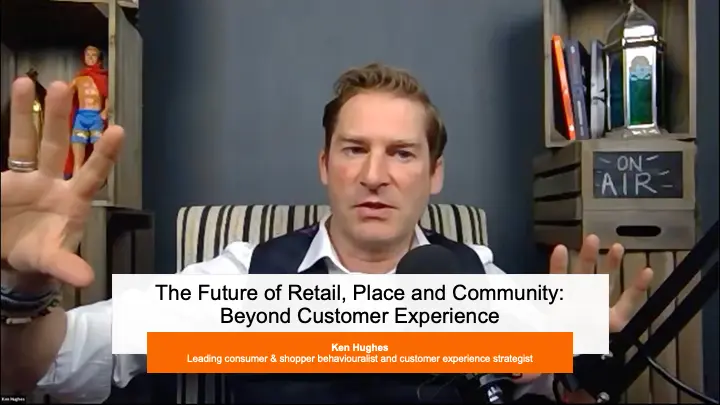
Consumer experience guru, Ken Hughes recently shared insights on the psychology of consumption with urbanOvation members. In a brilliant and provocative conversation he explored why and how people buy what they buy and crucially how changes in their behaviour will affect retail and place making.
Disruption - Get used to it!
Ken set the stage with a whirlwind survey of the disruption that started the decade. From fires in Australia and Covid lockdowns to a ship stuck that disrupted the global supply chain followed by a war in Ukraine and a tragic earthquake. The idea that the disruptive pressures on business, brands and retail will plateau is wishful thinking. There is no ‘New Normal’, we are in an era of “Never Normal”. The saying “Change is the only constant” has never been more true!
In the last decade technology was disrupting retail real estate. The last two years a flock of “black swans” just means we need to adapt even faster. Disruption is the foundation of opportunity. Ayrton Senna, the great Formula One racer, sums this up nicely; “It's very difficult to pass 15 cars in the sunshine but easy in the rain”. Preparing for challenging times requires agility. If you've got your wet tires on you can pass those 15 cars. When people say “I'm scared, it seems to be all challenges”, they forget that on the other side is opportunity.
Deep Connection
The pandemic disconnected us from friends, family and work. Whatever job your business is to connect with your customer. More powerful customer connections mean more customer lifetime value. Retail places need to make an emotive connection with customers. Forming meaningful connections with them demands understanding their values and putting them at the heart of the places we create. What is scarce or becomes more valuable. The future for retail and place making is about depth of connection.
Brené Brown, a relationship guru, defines connection as the moment when someone feels seen, heard and valued. Do most consumers visiting a store or restaurant feel seen, heard and valued? We need to move away from customer experience towards customer intimacy where we foster a sense of closeness and the experience becomes a relationship with the customer who then sells your product for you.
Digital First - The Rise of the ‘Blue Dot’ Consumer
Once paper maps helped get us where we wanted to go. We had to first know where we were. Today the blue dot on your smart phone map solves that problem! Uber is a variation of this theme, you stay where you are and the car comes to you. Why go to the cinema when Netflix brings the movie to your couch? Why go to a bar when Tinder lets you sit at home and swipe for a mate? Buying petrol takes time and is boring so why do it when an app called “Booster” finds your car’s blue dot and brings the fuel to you, cheaper without the real estate overhead?
The direct to consumer model is eating away at retail space. Who needs to go to the supermarket when it can come to you, to a restaurant when UberEats brings it to you. Blue Dots put customers in control. The retail real estate industry faces a challenge, are we asset based or built around the customer? ‘Blue Dot’ is both exciting and frightening. How place-based experience competes with convenience is the challenge of the decade.
What do consumers want?
For Blue Dot consumers convenience is paramount, “I want more, I want it faster, I want it better”. For others, often the younger end of the demographic spectrum, ‘consumerism’ is an evil ruining the planet. Yes, they still shop but increasingly value experience over stuff. Self-identification through possession is so last century, “Look at me, look at my new Nikes, look at my car”, where who I am is based on what I own. Now it’s “I am what I share, I am what I experience”.
We need to understand and prepare for a rapid evolution (revolution) in consumer values. Older shopping malls aren’t fit for purpose for Gen Zs and Gen Alphas.They see little relevance and connection to the digital spaces they inhabit. 15 year olds don't interact with shopping malls the same way millennials did 10 years ago. Anticipating the consumer behaviour of a 10 year old today who has been raised on TikTock and Instagram will be a decade from now is foolhardy. All we know for sure is the use of and demand for place will change! This is the Tick Tock generation and ‘Tinder-ization’ of society.
Going “phygital” - The Fusion of Physical and Digital
There isn't a line between online and offline. In the ‘phygital’ world we know every offer whether waiting in the real world or to be delivered from a website. Consuming something today starts with digital first. Going to a restaurant with friends is a perfect example. The conversation starts on a messenger app, we research restaurants, see what's near on Google Maps, check Yelp reviews and eventually book on Opentable, sharing PDFs of the menus and finally end at the restaurant with an amazing experience.
Those who create and operate physical space need to understand this digital first connection. The relationship between digital and physical space is one where the whole is more than the sum of the parts. The challenge is how do we get them into physical space. You may have someone who walks in the physical door one day and the digital door over the next day. To them there's no line.
From One Dimension to Three
Retail real estate today is like working one face of a Rubik's Cube. From a consumer point of view we’re connecting in one dimension. Stores are simple, efficient models, where people come to buy things. If that was a video game it would be Pong. Two-dimensional retail gives a consumer two options to interact, online and a physical store. If that was a video game it was Pac-Man.
Today we live in a three-dimensional world with multiple ways to connect with consumers. You can go to a physical store, or online, or to a third party app. Gamers today live in a 3D World with games like Fortnite or Call of Duty. Physical retail is playing Pac-Man when our customers are playing Fortnite and Call of Duty. Forget about online and offline they are points of connection in a digital first world.
Beyond Demographics - Know Thy Customer
For decades consumers have been segmented into neat demographic buckets. Look at Boomers to Millennials, at X’s and Z’s and you’ll see your own behaviours. There are many types of consumer beyond age such as socio-economic status. You can’t generalise about consumers when society is so diverse.
You become a consumer when you first spend your own money or influence your parents to buy something for you. Kids today become consumers playing Fortnite when they buy a ‘skin’ for their character. They’re playing in a virtual environment spending real currency on a virtual product to entertain themselves. That's a generation primed for the metaverse!.
On the other hand, Millennials are turning 45 and if you want to make an impact you have to make it digitally first. Then you follow through in physical space. They don’t value brands like McDonald's or KFC. They love street food because of the connection that they have with the person in the van. They love the idea that someone gave up their job at PWC, grew a beard to sell falafels from a van. That authenticity is real and not what you get at McDonald's or KFC. People are seeking connections and authenticity in their lives.
Collaboration
Today we are in a collaborative world where people share every thought and experience. This is a shift from passive to active consumption. Passive is when you buy what’s offered and active is wanting to be involved in the process. Every brand, business and product needs to consider what dissolving the line between passive and active means. Consumers expect to be active participants, share a brand’s values, understand the source of the raw materials etc.
Without collaboration you get a fragmented answer and a front-facing product to a consumer. Collaboration becomes more important with retailers being able to go to market digitally themselves and brands creating their own retail spaces. Place makers collaborating with tenants is a fusion that's essential to creating a meaningful, place-based experience.
Get Emotional! - Turning Transactions into Relations
People want something beyond a transaction when they venture from their screen into the real world. They want meaningful human interaction. Transactions can happen with one click from home. Many retail spaces are primarily transactional. People come to them, transact and go home. Transaction-focused retail is driving stores to close as revenue moves online.
The purpose of the store is shifting away from a place where you sell to a place where you build relationships. No one has a relationship with Amazon, it's a transactional space. Great places have something that digital will never have. What is scarce or becomes more valuable and so human contact and relationship depth as opposed to scale becomes more important. Brand loyalty is difficult in a purely digital space where there's no emotional loyalty.
Customer Lifetime Value - From Indifference to Compassion
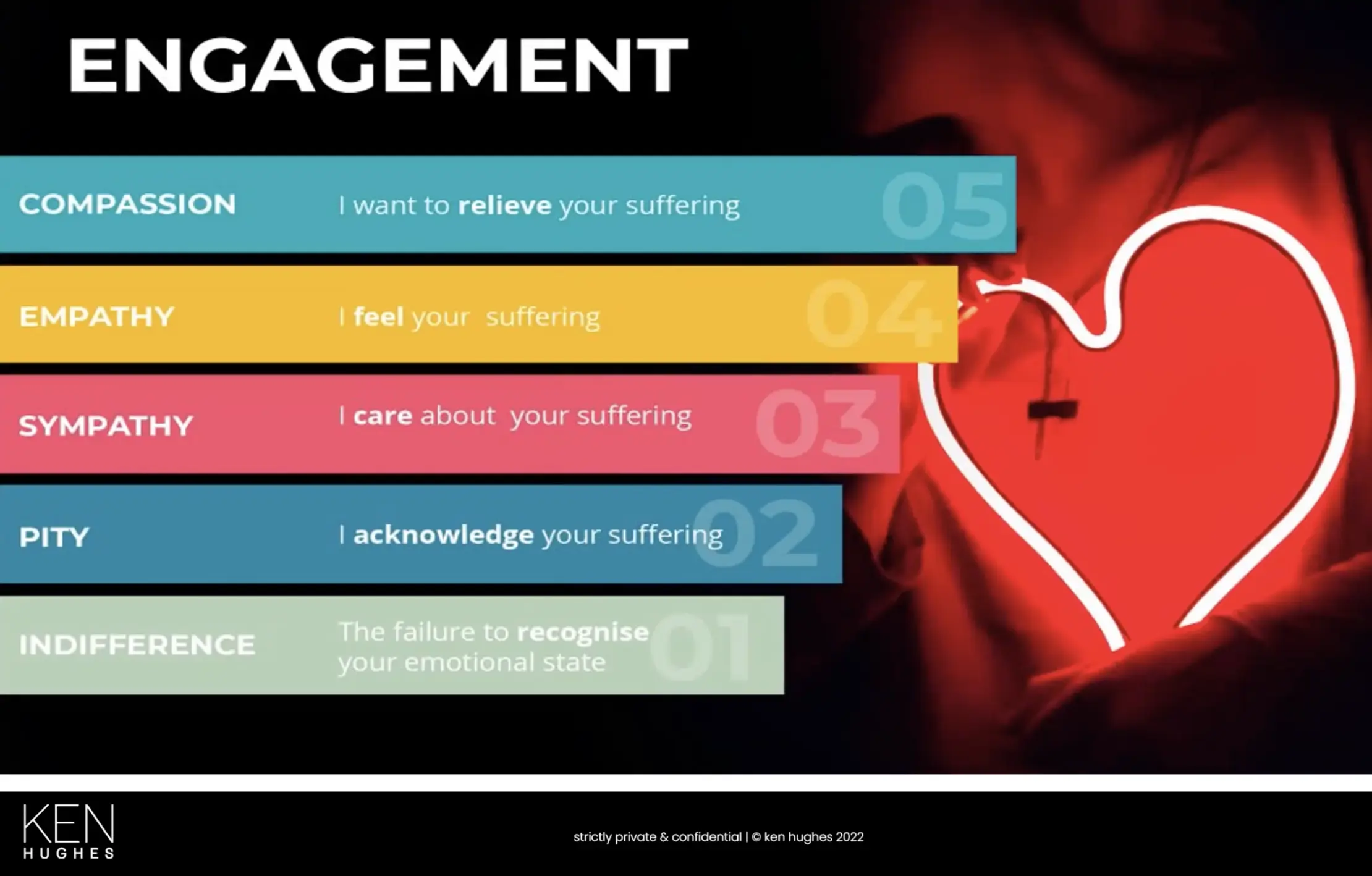
Just satisfying customers is not enough, we have to delight them, we have to go beyond their expectations to make them smile. This requires climbing a ladder of engagement from indifference through pity and sympathy to empathy and finally compassion. You connect when you do things that are innovative and when you use place as a way to deliver joy and build relationships.
It is important to excite, delight and to strive for customer intimacy rather than just customer experience. Playing a good digital game is not enough. Harley-Davidson talk about the thousands of sales reps they have on the road because anyone riding a Harley is a sales rep. Not many brands inspire the kind of loyalty where customers tattoo their logo on their skin!
Credits image: Javi Garcia
The Power of Place
For real estate people ‘place making’ is all about bricks and mortar, “build it and they will come”. They won’t of course without the people that deliver a memorable experience. A shed will do if the people serving the customer are engaged and passionate. The place is the stage that helps people feel something and make connections. Great design encourages engagement and human contact that digital can’t. Great places are the antidote to the virtual.
Shopping centre architects and owners are keenly aware of this. Customers don't know whether it's the floor, ceiling or lighting that makes them feel good. Even toilets need to be five-star quality because people will remember them and feel like they've been treated special. Creating places where people feel good is vital.
Artificial Intelligence: Retail Employees of the Future?
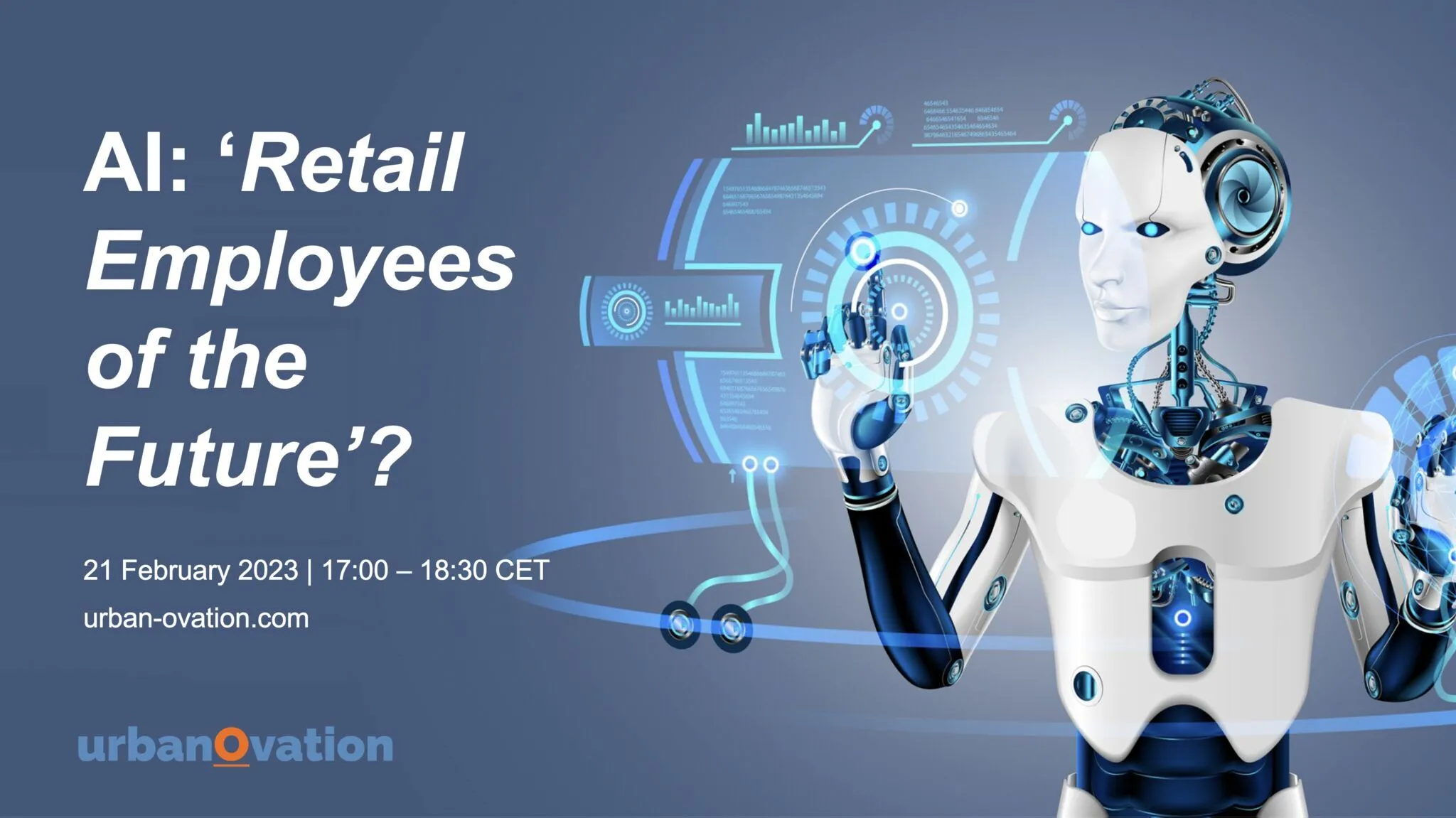
The rise of technology in retail is undeniable, but how do we navigate the real estate landscape in this digital-first world? It's important to keep #customerservice at the forefront, but also to be flexible and adapt to changing consumer expectations. As we move towards an AI-powered future, it's worth considering the impact that technology will have on both employers and customers. With robotics and AI disrupting traditional retail, it's important to consider the potential impact on #customerexperience and #customerengagement. Will AI make the customer experience too generic? And with staffing shortages and employee retention challenges, is AI the answer? Join urbanOvation and share your thoughts together with Chris Igwe, Linda Johansen-James, Ian Scott, Phil Zheng at our next online conversation about the Future of Retail.