
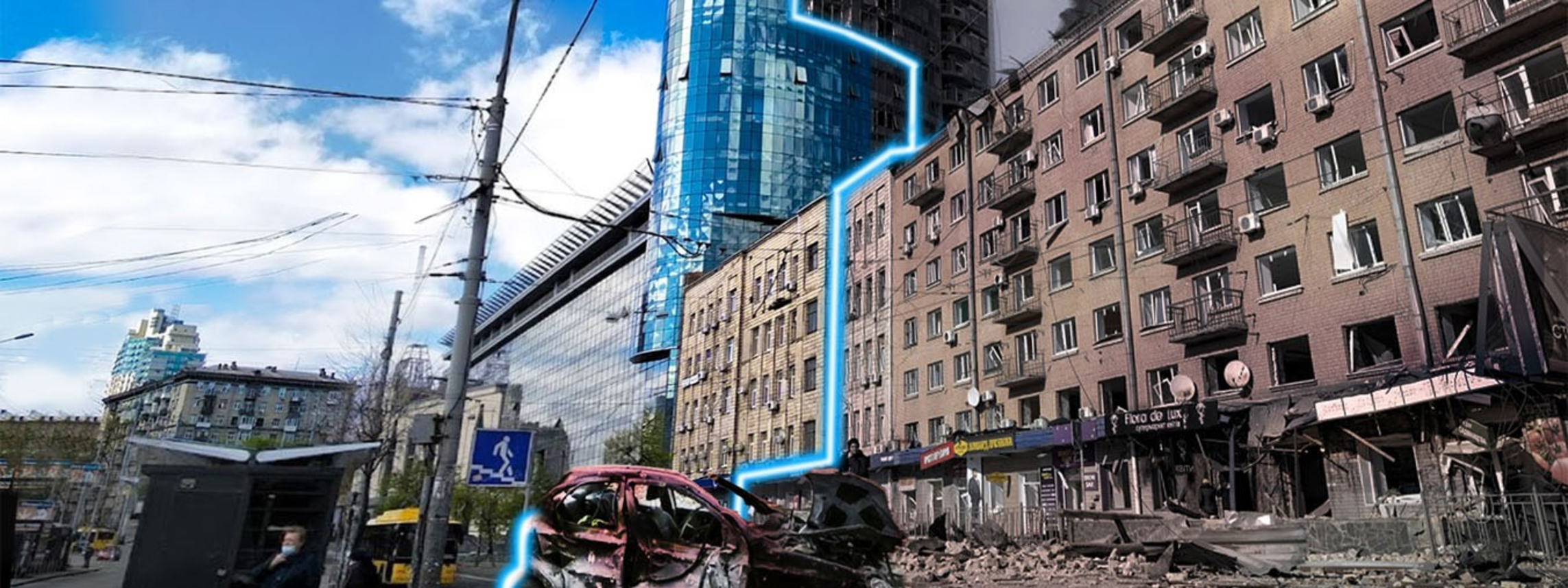
Rebuilding Ukraine - Reality Check Summary
Published on May 1, 2025
A thought-provoking urbanOvation Reality Check explored the pivotal role the real estate industry can play in Ukraine's recovery. Industry professionals from Ukraine and 13 other countries discussed the challenges and opportunities of rebuilding Ukrainian cities when the conflict finally concludes.
A ‘fireside chat’ moderated by urbanOvation founder, Bill Kistler set the stage. Cameron Sawyer, Chairman, SG Real Estate Services, and Guy Perry, Senior Advisor McKinsey shared their extensive experience and insights earned from years of investing and developing in Ukraine. A spirited debate with all participants followed. Click the attached for a summary of key themes:
An Unprecedented Challenge and Opportunity:
The war has caused immense destruction, requiring reconstruction on a massive scale, described as the greatest challenge since World War II.
-
Multilateral organizations are already committing ‘Marshall Plan-like’ funding structures of hundreds of billions of dollars.
-
The opportunity is not just economic but about playing a meaningful role in creating a sustainable and thriving Ukraine.
-
Despite the challenges of attracting institutional investors, there is a growing appetite for investing in post-war Ukraine.
-
The situation presents an "opportunity to build a completely new and society and economy".
Required Talent, Resources, and Opportunities:
The conversation was not about telling Ukrainians what to do, but on understanding how professionals from the international real estate industry can help.
-
Rebuilding requires professional skills, technical expertise, and resources in areas like urban planning, development, and investment.
-
International expertise brings best practice insights to help Ukrainian experts enhance but must avoid imposing foreign solutions.
-
Ukraine has a well-developed housing industry capable of addressing urgent needs with proper capital support.
-
Some felt Ukraine has "significant expertise in city planning" inherited from the Soviet era. Others cautioned that while urban cores are well-planned, suburbs need improvement.
-
International support is needed as an “endorsement and economic backing for sophisticated district development”, and for knowledge in areas like climate resilience and energy efficiency.
-
Rental housing is scarce and required to meet the needs of returning Ukrainians.
-
Foreign funding should be viewed as seed capital, with local capital leading the effort.
The Process: Key Actors, Partners, and Governance:
Understanding decision-makers, government bodies, international organizations, and local partners is crucial.
-
Humility is paramount. Partnering with local actors is essential. As noted, "we have to deal with the local challenges, together with Ukrainian partners".
-
The Vlasnamisto project was discussed as a potential model of collaboration with local government and aiming to benefit the entire community.
-
A significant challenge is the historical issue of corruption, particularly in city planning, described as "horrendously destructive".
-
Western funding money will "come with strings attached with conditions for accountability, transparency, and sustainability ".
-
Local, ‘ground-up’ planning is important to demonstrate vision and openness to innovation.
-
Careful consideration should be given to rebuilding at a district level rather than plot by plot.
-
UNESCO World Heritage criteria were proposed as a potential governance structure for rebuilding.
Approaching Reconstruction: Leapfrogging and Innovation:
There was an emphasis on the need to "leapfrog outdated ways of building as it’s impossible to try to reconstruct Ukraine as it was and then upgrade it".
-
The destruction presents an opportunity for a "blank canvas" to design cities of the future.
-
Leapfrogging means creating a wiser, more efficient future, including downsizing infrastructure, improving energy efficiency, climate resilience, moving away from Soviet-era planning
-
Prioritizing mixed-use communities, public transit, and multiple choices for residents and creating flexible urban spaces.
Strategic Preparation and "What Next?":
Despite the ongoing conflict, now is the time to prepare. Cameron quoted a Ukrainian saying, "Prepare your sled in the summer".
-
Preparation involves reaching out to partners and getting ready.
-
The priority should be doing “practical stuff rather than just theorizing”.
-
Specific next steps agreed upon included participants thinking about future topics, suggesting additional contributors and organizing follow-up calls.
-
Participants were encouraged to consider concrete ideas on how the real estate industry can help.