
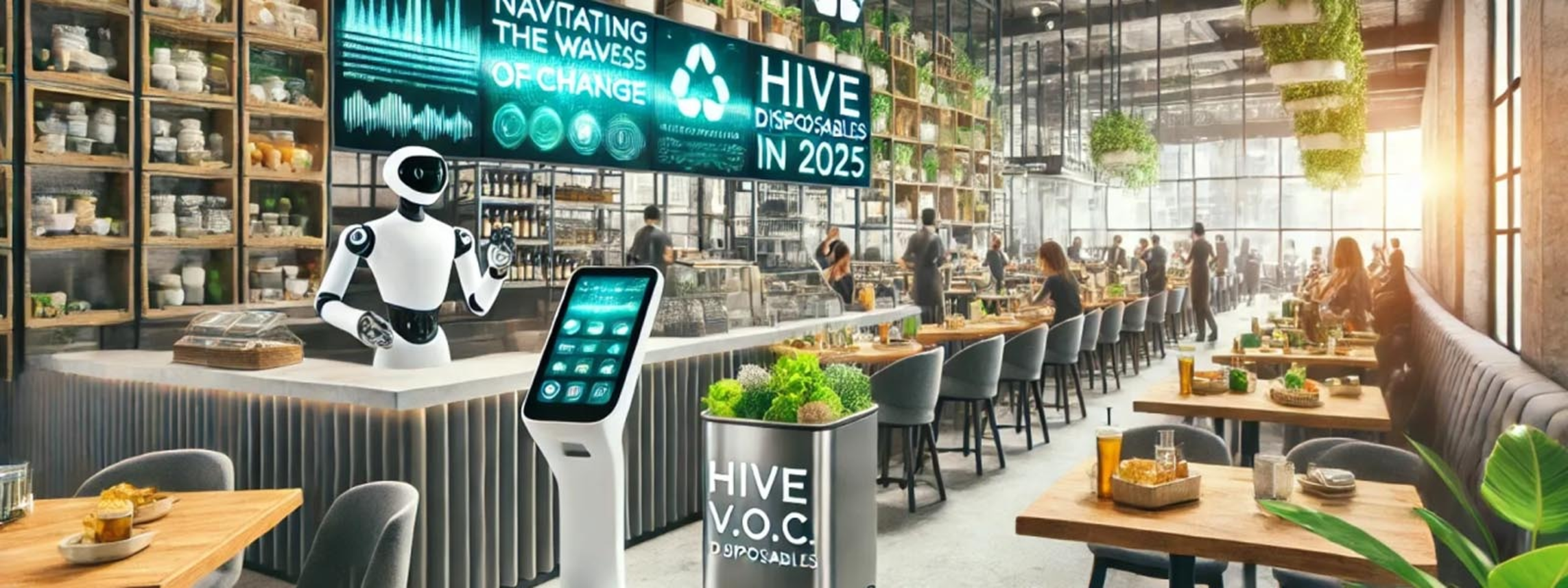
Technology, People, and the Future of Food & Retail
Technology, People, and the Future of Food & Retail
It's not what you think!
An urbanOvation Reality Check was an extraordinary debate that explored the challenges and opportunities behind the fusion of F&B, retail, and technology. The unscripted, discussion was led by uO’s Future of Retail Forum Co-Chairs, Chris Igwe and Linda Johansen James and featured industry leaders Jonathan Doughty and Will Odwarka.
Will and Jonathan set the stage with thought provoking insights, followed by a spirited conversation with the 30 industry leaders who joined the call. “Chatham House rules” were in place as with all Reality Check events, but below are some of the Nuggets from the discussion.
A Wake-Up Call!
The food and retail industries are undergoing a seismic transformation, driven by a collision of technology, shifting consumer habits, and changing workforce dynamics. Brands need to either adapt—or risk irrelevance.
Some key themes emerged:
- AI is not a luxury—it’s a necessity for survival
- Human interaction remains irreplaceable in creating meaningful experiences
- Traditional retail models are outdated, and social media is reshaping discovery.
- The focus on short-term profits is killing long-term brand value.
AI & Automation: The Double-Edged Sword
Technology is no longer optional. AI is already transforming the food and retail industries, particularly in inventory management, staffing, and customer experience.
“AI crunches massive amounts of data, analyzes patterns, and optimizes everything from stock levels to staffing,” noted Will. The result? No more “Sorry, we’re out of that” moments. AI forecasts stock needs based on weather, holidays, and economic trends, ensuring restaurants stay prepared.
Yet, the speakers were adamant: AI should work with people, not replace them. As moderator Linda Johanson-James emphasized, “Implementing AI should be in conjunction with your people, not in place of them.”
Other nuggets:
“Technology solves the problem which we have created because it allows us to do things with less people. But the interaction, the way where experience is created, cannot be replaced with something else than a human."
AI is not about the next gadget but requires a holistic business analytics to find what it needs and what’s possible
"AI crunches enormous amounts of data puts them together, analyzes, learns on the way how it analyzes the thing, and at one point, it will help you to do exactly what you said, the forecasting, the planning, the people, the training."
"Nobody walked into that restaurant and said, I come to TGI Fridays because the food is absolutely amazing. But what they said was, I had an amazing evening. And that was down to people, people and people every time."
"The interaction, the way where experience is created, cannot be replaced with something else than a human. But that human requires education, skill, understanding, storytelling skills, and so many different abilities."
Retail is No Longer Just About Shopping
Once upon a time, malls dictated foot traffic. Now? TikTok, Instagram, and Google Maps have taken over. As one panellist observed, “Malls used to create foot traffic—now people discover unique, off-the-beaten-path experiences through social media.”
The rise of "social discovery" is destroying outdated retail models. If shopping centres don’t evolve into experience-driven hubs, they’ll be left behind. Food and beverage (F&B) now accounts for 25-26% of mall floor space, turning retail centres into social destinations.
But success requires authenticity and relevance. Jonathan Doughty stressed that brands must ditch the cookie-cutter approach and tailor their offerings to local markets. Generic concepts don’t work anymore—cultural nuance and community connection matter.
Other nuggets:
"Malls used to create foot traffic—now people discover unique, off-the-beaten-path experiences through social media."
"TikTok, Instagram, and Google Maps are destroying the idea that malls can generate footfall. People now find the most exceptional things in cities easily, and malls are being wiped out."
"If you go into a shopping centre and count the bags, you'll see the same people coming two or three times a week for food, but the bag count has dropped significantly."
Short-Term Profit vs. Long-Term Brand Value
Another Reality Check? Chasing short-term profits is killing long-term brand loyalty.
- Brands that prioritize aggressive expansion without maintaining quality and service fail.
- Private equity investments often strip authenticity, leading to consumer disengagement.
- Retail real estate is outdated, struggling to adapt to flexible, experience-driven concepts.
Speakers urged businesses to focus on sustainable, experience-led growth rather than rapid, unsustainable scaling.
Other nuggets
“We give up a story which we've built over 20 years. We give it up because it makes us rich. And after that, we don't give damn a who what happens with our business."
"Private equity has got a lot to answer for in terms of some of the disasters that we're seeing in multiple brand rollouts."
The Future: Rethink, Reinvent, Reconnect
The industry’s challenges are clear. The solutions? Embrace change, rethink engagement, and rebuild trust.
- Invest in AI & automation—but as an enabler, not a replacement.
- Create experiences—not just transactions.
- Leverage social media & digital discovery—consumers decide online first.
- Redesign physical spaces—community hubs, not just retail centers.
The bottom line? The brands that win will be those that evolve—not those that resist change.
Recommendations
· Develop AI capabilities to improve inventory management, staffing, and customer experience.
· Integrate both "hardware" and "software" in retail and restaurant design.
· Prioritise long-term brand value and customer experience.
· Explore innovative concepts like "Imprint" that combine multiple functions to create unique experiences.
· Share examples of successful AI applications in food service that have enhanced efficiency without compromising human interaction.
· Organize a follow-up session focused on practical AI implementation strategies for small to medium-sized restaurant businesses.
· Improve working conditions and career prospects in the food service industry to attract and retain talent.
· Reevaluate the approach to long-term leases and tenant mix to stay relevant for changing consumer preferences.
· Conduct thorough research on local markets and cultural variations before expanding to new locations.
· Leverage social media and influencer marketing to drive traffic to physical locations.
· Train staff to deliver exceptional customer experiences that cannot be replicated by technology.
· Explore ways to improve the perception and value of food service careers in the property industry.
· Develop strategies for better understanding and targeting consumers in the post-smartphone era.
· Sign up for the urbanOvation platform to continue discussions and share insights on retail innovation.
Tell us what you think!
What’s your take? Is AI the key to success, or does human connection still matter most?